
If Andy Burnham Comes to Power: Navigating a Fiscal Straitjacket

Updated: Sep 4
If Andy Burnham comes to power, the issues list he inherits will be harder to swallow than a Kälteen bar. He walks into a fiscal straitjacket, a testy and unforgiving bond market, and green shoots of recovery threatened by a second Middle East flare-up. The UK's increasingly polarised political landscape has chewed through six PMs in the last decade. So, what should his priorities be?
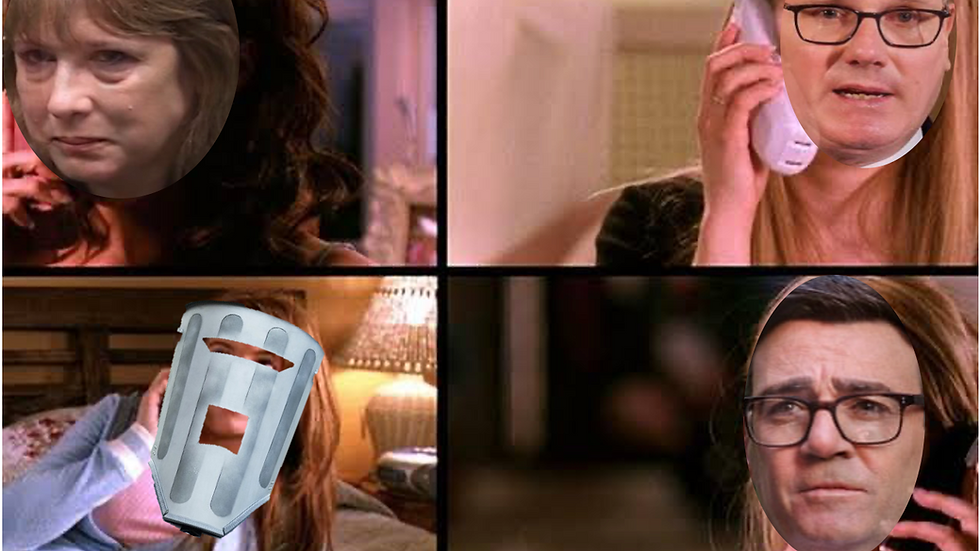
The Fall of the It Girl: Why Did Starmer Become So Unpopular?
He became PM after a landslide election as safe-pair-of-hands Starmer. Yet, less than two years later, he tendered his resignation. How did this happen?
Evidently, decisions around Mandelson were the final straw. However, confidence had been ebbing for some time. GDP rose just 0.1% in Q4 2025, falling below even modest expectations. Business investment shrank, and services stagnated. January 2026 brought zero growth, a worse result than every economist surveyed had forecast. On top of this, there was a growing gap between the macroeconomic picture and what people actually felt in their pay packets, a gap that Starmer struggled to close.
The underlying growth in the UK economy is simply not enough to support the deficit. Along with Starmer’s fiscal constraints against cutting spending, his only option was one of the most unpopular policy tools in the kit: raising taxes. Reeves chose UK SMEs as her target.
In the middle of the Mandelson blunder, the performance of the UK economy actually picked up at the beginning of 2026. However, the re-ignition of inflation woes due to the Middle East conflict posed a significant threat. Burnham is stepping into a situation with green shoots of recoverability, but he must protect them.
Why Is Our Recovery So Sluggish?
The UK economy contracted for a second consecutive month in June. The S&P Global PMI slipped to 49.4, marking a fourteen-month low. Growth forecasts have been cut repeatedly. Pantheon Macroeconomics now sees growth at just 0.6% for 2026, while KPMG and Barclays have both downgraded their forecasts to 0.7%. As explored in a previous post on Stocks and the City, the UK's productivity problem is structural. You cannot tax your way out of stagnation, and you cannot borrow your way into growth without a punishing response from Gilt investors.
Defence, Deficits, and Bonds
Spending in the UK's inflationary environment is a faux pas worse than Cady's Bride of Frankenstein costume. A significant portion of public spending is already consumed by debt servicing. The gilt market has made its views on fiscal loosening abundantly clear. As noted in previous posts, UK gilts remain one of the most sensitive government bond markets in the developed world due to the legacy of the Truss mini-budget shadow that never fully lifted.
When Starmer announced an extra £15 billion in defence spending, gilt yields rose across all durations. This occurred despite assurances that the spending would be offset elsewhere. The message from markets is consistent: the UK's fiscal headroom is thin, and they are watching closely.
NATO members agreed at the 2025 summit to raise spending to 3.5% of GDP by 2035. The UK has pledged to hit 3% within the next parliament, with military chiefs pushing to bring the deadline forward to 2030. In a sluggish, still-inflationary economy with thin fiscal headroom, there is no clean answer here. Bond markets will price in any sign that the numbers do not add up.
In response to gilt nervousness, Burnham has stated he will maintain Reeves' fiscal rules. This is the right thing to say. However, whether it is the right thing to do remains the central tension of his incoming premiership.
What Can Burnham Achieve from This Fiscal Straitjacket?
So, what can Burnham actually achieve from this fiscal straitjacket? Well, the new girl is in town, and her name is Manchesterism.
Burnham, unlike Starmer, who was a lawyer into his 50s, is a career politician. He joined Labour at 15, and his career has culminated in recent years with a track record of delivering growth in Manchester that outpaced the rest of the UK during his two terms as Mayor. His strong image among peers and the populace, natural charisma, and Northern success story championing traditional Labour voters have bolstered his standing materially.
Burnham plans to stimulate the economy through decentralised "good growth in every postcode." This initiative will be backed by consolidating public and private investment at a place-based level through local good growth funds. The model he is pointing to is Manchester's own £1 billion Good Growth Fund, which has channelled capital into town centre regeneration, housing, innovation districts, and transport. Private investment must do the heavy lifting here, as Labour simply does not have the budget to face the challenge alone.
The Importance of Narrative
It’s all about narrative in the Westminster Clique. The Labour Party is so willing to start whispering about their party leader that "she doesn't even go here" became the mood music of Starmer's final months. While Count Binface is holding Reform's feet to the fire—the most existential challenge to Labour—the political unrest and polarisation persist, and the seeds of discord are firmly sown.
Starmer suffered because he never got a grip on selling the story. The economic picture was arguably improving before the Middle East conflict 2.0. However, Starmer really struggled to land this message on the global stage. A government that cannot communicate what it is doing and why will always be at the mercy of what goes wrong.
Burnham presents a different proposition. He has a strong image as the North's champion, a career-long instinct for politics, and a connection with voters who have felt overlooked by Westminster. In terms of bond investors, as discussed previously, spreads are ultimately a popularity contest. Confidence is imperative at the moment. For the first time in a while, there is at least the possibility of a PM who can navigate cliques, pressure, and the stage.
The Central Question of Burnham's Premiership
Whether this is enough to find wriggle room in a fiscal straitjacket, tame the Gilt market, and keep Reformers at bay is the question of his premiership. He will also, almost certainly, never be able to answer the most important question of them all—“is butter a carb?”
In conclusion, Burnham's approach to governance will be crucial in determining the future trajectory of the UK economy. His ability to communicate effectively, engage with the electorate, and navigate the complexities of fiscal policy will be tested as he steps into this challenging role. The stakes are high, and the path forward is fraught with challenges, but there is also potential for meaningful progress if he can harness the right strategies and support.


Comments